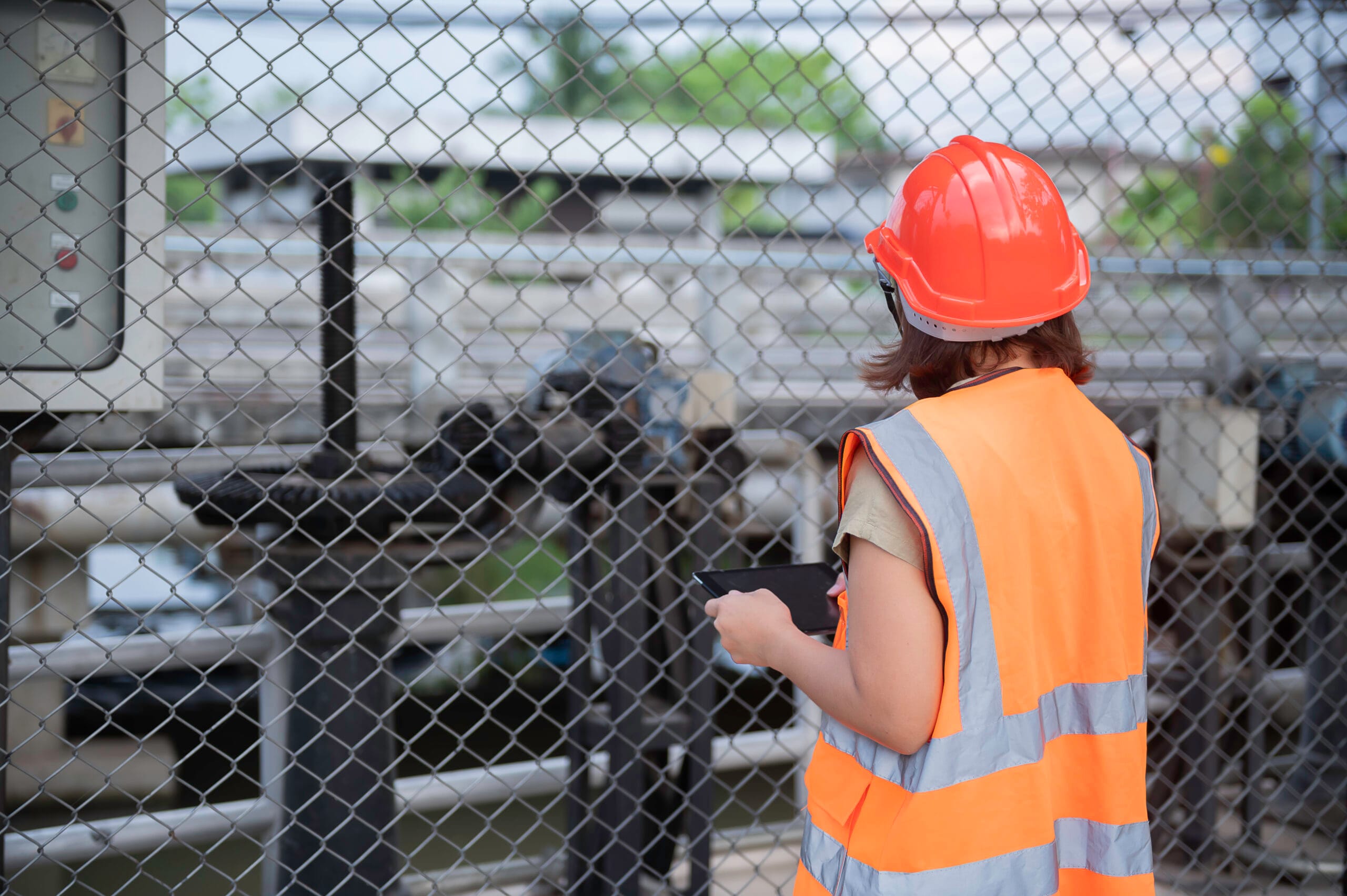
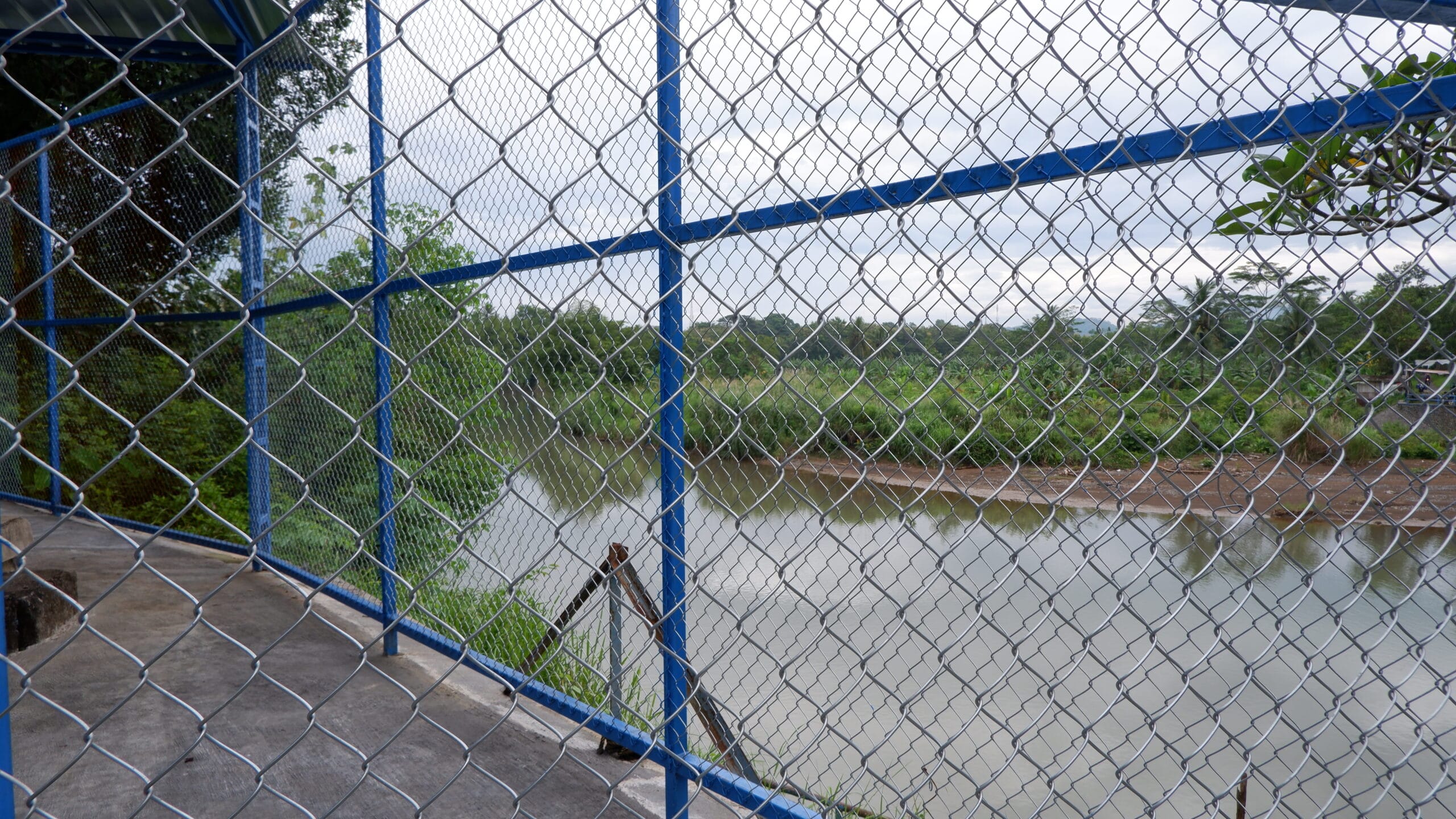
When a fence is first installed, it often looks perfect. The panels are straight, the posts are aligned, and the finish is clean. However, nothing on day one shows whether the fence will still perform well years later or start to sag, corrode, and fail earlier than expected.
At W&C Engineering, this is a common issue we see. Many clients come to us after a previous fence has failed, not due to poor installation, but because the product itself was not suitable for Malaysia’s conditions. It looked strong, but it was not built to last.
So how can you tell the difference before making a decision? This article will guide you through the key factors that determine a fence panel’s real strength, including the details many suppliers often overlook.
The First Thing to Check: Wire Diameter
Two fence panels can look identical at first glance, with the same height, mesh pattern, and powder coated finish. However, the difference often lies in the wire diameter. A panel made from 3.0mm wire versus 4.0mm wire may look similar, but that small difference has a big impact.
Thicker wire creates a stronger and more rigid panel. It offers better resistance to bending, cutting, and pressure from external forces such as impact, wind, or daily wear. A 3.0mm panel will flex under pressure, while a 4.0mm panel holds its shape much better, especially in outdoor conditions in Malaysia.
For residential fencing, 3.0mm to 4.0mm is generally suitable. For factories, industrial sites, or higher security areas, 4.0mm should be the minimum standard. If a supplier cannot clearly confirm the wire diameter, it is a sign to question the product before making a decision.
Flat Panel vs V-Press Profile: Why the Shape of the Panel Changes Everything
This is one factor many property owners in Malaysia are not aware of, yet it is very important.
A flat welded mesh panel is simply a grid of wires welded together. It works for basic boundary marking, but under pressure such as people pushing, wind load, or impact, it relies only on the wire strength. Over time, especially in Malaysia’s heat, these panels can start to bow at the centre.
A V press profiled fence panel, also known as a 3D or V profile fence, improves this by adding V shaped bends along the panel. These bends act like structural supports, spreading force across the panel instead of concentrating it in one area. This makes the panel more rigid, more resistant to bending, and harder to deform compared to a flat panel of the same wire size.
Similar to how a corrugated roof is stronger than a flat sheet, the shape of the V press panel adds strength beyond just the material itself.
What a Weak Fence and a Strong Fence Actually Look Like
| Fence That Only Looks Strong | Fence That Is Actually Strong |
| Thin wire – 2.0mm or 2.5mm diameter | Heavy wire – 4.0mm diameter minimum |
| Flat panel with no structural profile | V-press profile with structural bends across panel |
| Galvanized before welding – weld points exposed to rust | Hot-dip galvanized after welding — all weld points protected |
| Posts set too shallow or without concrete | Posts set to correct depth with concrete foundation |
| Panels flex and bow within 2-3 years | Panels remain rigid and straight after years of use |
| Rust appears at weld joints within 12-18 months | Corrosion resistance maintained throughout panel lifespan |
| Easily pushed out of alignment by hand pressure | Resists lateral pressure and does not deform under impact |
Surface Treatment: The Part Everyone Gets Wrong
Most people assume checking if a fence is galvanized is enough to prevent rust. While that is a good starting point, not all galvanizing methods are the same, and the difference matters in Malaysia’s climate.
One common method is galvanising the wire before welding. This is cheaper and faster, but the welding process burns off the zinc coating at each joint, leaving many exposed points where rust can start, especially in areas where moisture collects.
The better option is hot dip galvanizing after welding. This coats the entire panel, including all weld points, with a continuous protective layer. In Malaysia’s high humidity and frequent rain, this method offers much stronger and longer lasting protection against corrosion.
Post Installation: The Overlooked Half of Fence Strength
Even the best fence panels will fail if the posts are not properly specified. This is a common issue we see, where strong panels are installed on undersized posts or set too shallow without proper concrete support, causing them to tilt or shift over time.
As a general guide, posts should be embedded at least one third of their length into the ground, secured with concrete, and allowed to fully cure before installing the panels. The post strength should also match the panel height, as taller panels place more force on the base. For panels above 1.8 metres, RHS posts with suitable thickness are recommended.
At W&C Engineering, we always advise on the correct post specification as part of the overall solution, because a fence is only as strong as its installation and should remain durable for years to come.
The Five Questions to Ask Before You Buy Any Fence in Malaysia
1. What is the exact wire diameter?
Get a specific number in millimetres. For security fencing, 4.0mm minimum. Do not accept “heavy gauge” as an answer without a figure.
2. Is the panel flat or profiled?
A V-press or 3D profile panel is structurally stronger than a flat panel of the same wire gauge. For any span over 2 metres between posts, a profiled panel is the better choice.
3. Is it hot-dip galvanized before or after welding?
After welding is the correct specification for long-term outdoor use in Malaysia. Before welding is cheaper but leaves weld points unprotected.
4. What post specification is recommended for my panel height?
A reputable supplier will have a clear answer. If they do not know or say “any post will work,” that is a concern.
5. Does the supplier have experience on similar projects in Malaysia?
Fencing in our climate has specific requirements. A CIDB-registered supplier with a track record on residential, commercial, and industrial projects in Malaysia will give you a better product recommendation than one sourcing panels from wherever is cheapest.
What W&C Engineering Recommends
We are often asked what the best fence is for a property. The answer depends on the application, budget, and risk level, but the principle is simple. Do not choose a fence based on appearance alone. Focus on the material, finishing, and whether the supplier can provide clear and reliable specifications.
As one of Malaysia’s established fencing suppliers and contractors, W&C Engineering delivers fencing solutions for a wide range of projects, from residential properties and gated communities to factories, substations, and government facilities. With strong engineering knowledge and hands on experience, we understand what performs well in Malaysia’s conditions.
If you are planning a fence and want a solution that lasts, not just looks good on day one, speak to us. We provide honest advice, proper specifications, and competitive pricing backed by products we trust.
Frequently Asked Questions
1. How do I know if a fence panel is actually strong or just looks strong?
Genuine structural strength comes from wire diameter, panel profile, weld quality, and surface treatment — not appearance. Key signs include a wire diameter of at least 4.0mm, welding at every intersection, a V-press profile that resists lateral bowing, and hot-dip galvanizing after welding. A panel that flexes easily when pressed or has light, thin wires is unlikely to hold up in Malaysia’s conditions long term.
2. What is a V-press fence panel and why is it stronger than a flat panel?
A V-press fence panel has horizontal V-shaped bends pressed into the mesh at intervals along the panel height. These V-bends act as structural beams that resist lateral force, preventing sagging and bowing. A flat panel has no such reinforcement and relies entirely on wire thickness for strength. The V-press design can deliver up to three times greater lateral rigidity compared to a standard flat panel of the same wire gauge.
3. Why do some fences bow and sag after a few years in Malaysia?
Fence panels bow and sag due to insufficient wire diameter, flat panel designs with no structural profile, poor weld quality, posts set too shallowly, and corrosion at weld points caused by galvanizing before welding rather than after. In Malaysia’s tropical climate, heat, humidity, and UV exposure all accelerate these failure modes significantly.
4. What wire gauge should I look for in a strong fence panel for Malaysia?
For residential boundary fencing, a minimum wire diameter of 3.0mm to 4.0mm is recommended. For commercial, industrial, or security fencing applications, 4.0mm wire is the standard minimum. A heavier wire gauge means greater rigidity, cut resistance, and longer service life — especially important in Malaysia where panels face continuous heat, humidity, and monsoon rain.