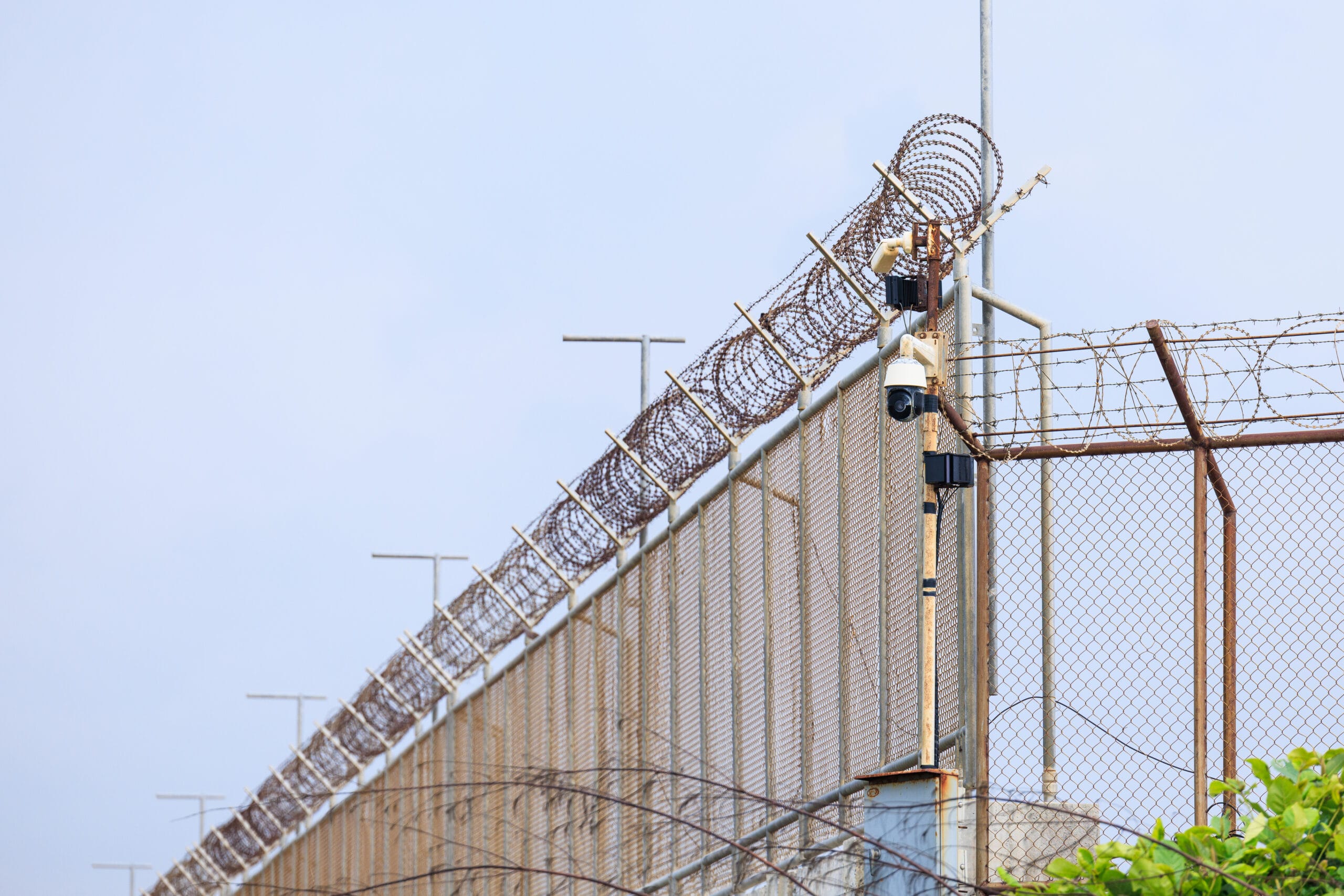
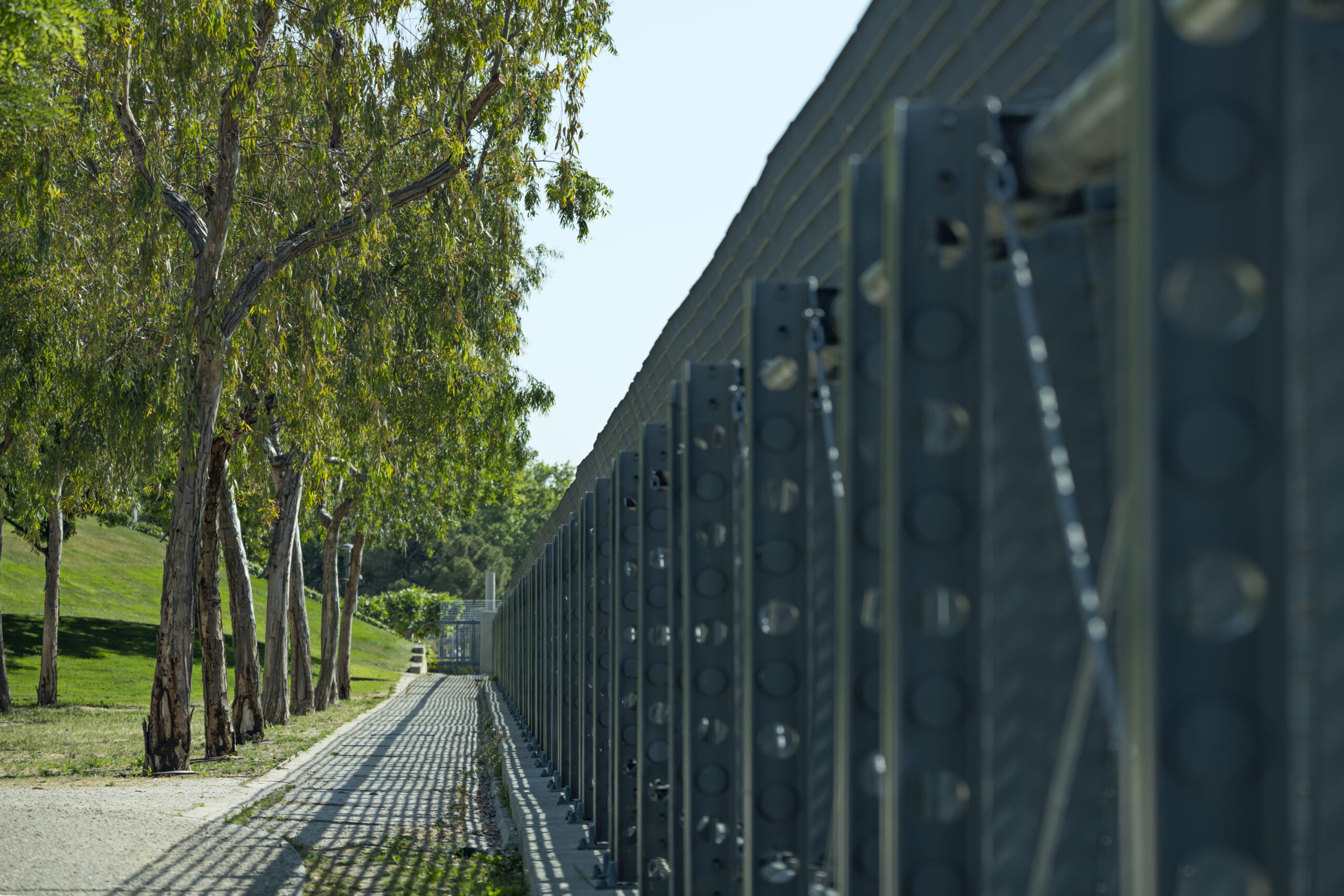
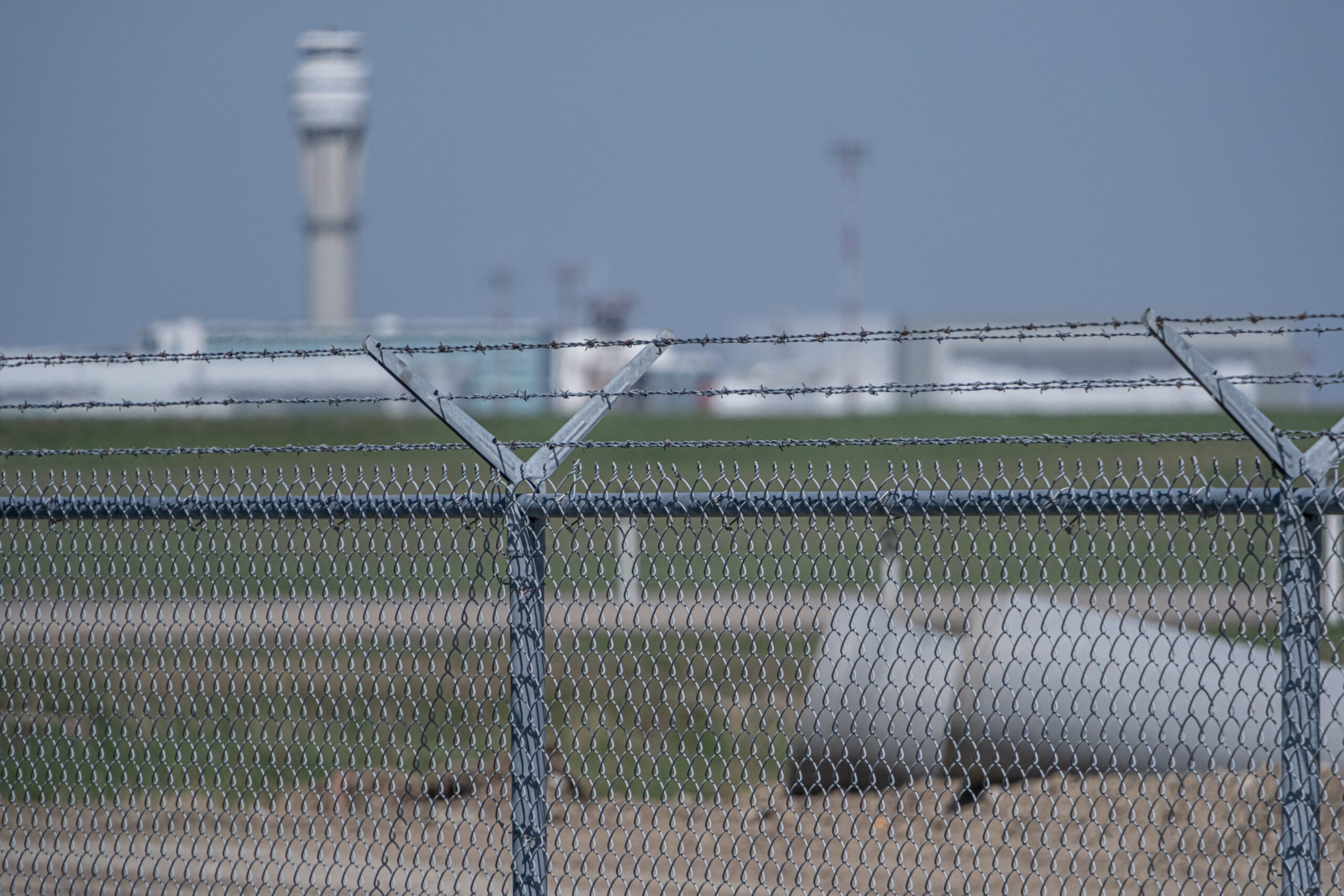
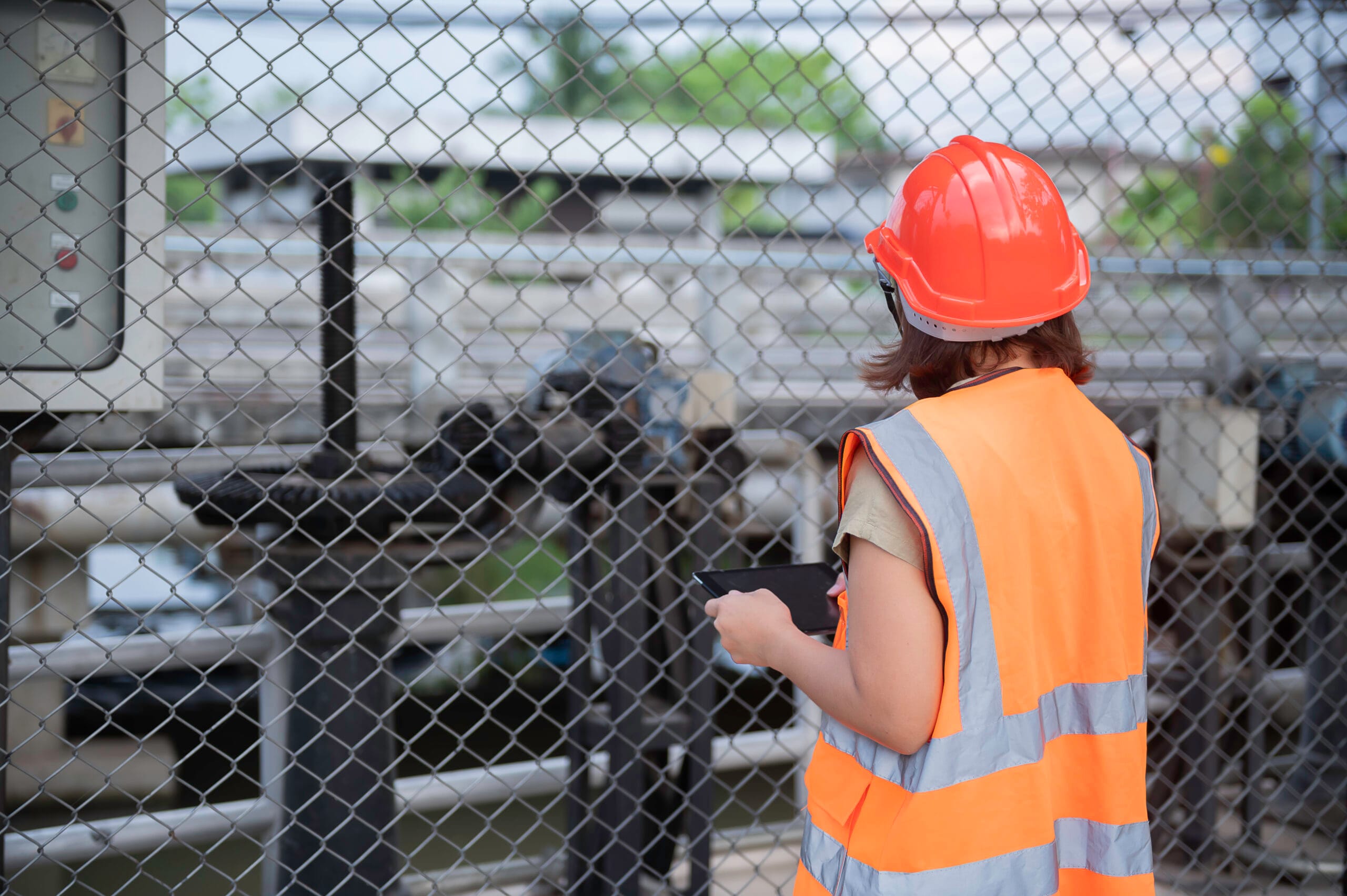
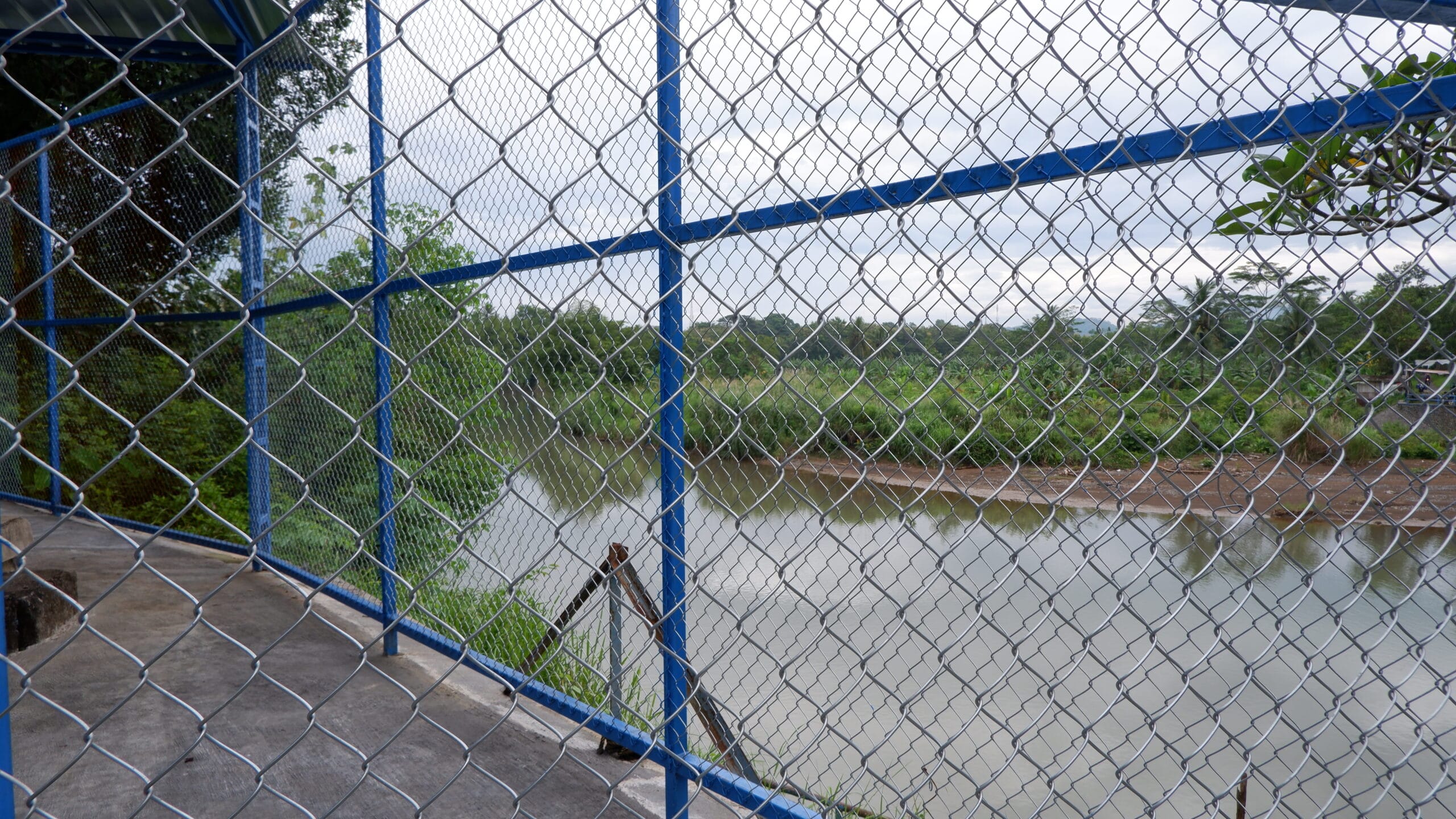
Malaysia’s national infrastructure protection priorities have shifted noticeably in recent years, with increased attention on securing utility substations, water treatment facilities, telecommunications infrastructure, and energy installations against both opportunistic intrusion and more deliberate targeting. This has put a previously niche fencing specification — V-press security fencing, also known as 358 mesh — into far more frequent use across Malaysian critical infrastructure projects.
If you are responsible for specifying perimeter security on a utility, energy, or critical infrastructure project in Malaysia, this is what you need to understand about V-press fencing, why it has become the specification of choice for the highest-risk sites, and where it fits relative to other high-security fencing options.
What Makes V-Press (358 Mesh) Fencing Different
V-press fencing gets its “358” designation from its specification: 3-inch by 0.5-inch mesh apertures, woven from 8-gauge wire. This produces a small, rectangular mesh pattern with a tighter and more rigid structure than standard welded mesh anti climb fencing.
The “V-press” name comes from the manufacturing process — the wire is pressed into a V-shaped profile at each intersection point, which significantly increases the rigidity of the panel compared to flat welded mesh. This rigidity is the key practical advantage: V-press panels resist bending, cutting, and climbing attempts more effectively than standard anti climb fencing, because the V-press structure does not flex or deform under the kind of force an intruder would apply.
The combination of small aperture size, heavy wire gauge, and the structural rigidity from the V-press manufacturing method makes this the highest practical security tier available in mesh fencing — which is exactly why it has become the standard specification for Malaysia’s most security-sensitive infrastructure projects.
Why Critical Infrastructure Projects Are Increasingly Specifying V-Press
Several factors specific to Malaysia’s current infrastructure investment environment have driven increased adoption of V-press fencing.
- Heightened security expectations for utility and energy infrastructure. As Malaysia continues to invest in grid modernisation, renewable energy infrastructure, and water and telecommunications utility upgrades, the security specifications attached to these projects have become more rigorous — often influenced by international standards and the expectations of foreign investment partners involved in financing or operating these facilities.
- Rising awareness of physical security as a component of critical infrastructure resilience. National conversations around infrastructure resilience increasingly include physical security alongside cybersecurity and operational resilience — recognising that a compromised perimeter is a vulnerability regardless of how well-protected the digital systems behind it are.
- Insurance and regulatory pressure on operators of sensitive facilities. Operators of utility substations, telecommunications exchanges, and similarly sensitive sites face increasing scrutiny — from insurers, regulators, and in some cases security audits tied to operating licences — regarding the adequacy of their physical perimeter security. V-press fencing is increasingly the specification that satisfies the higher end of these requirements.
V-Press vs Standard Anti Climb Fencing: When Does the Upgrade Make Sense?
Not every high-security application requires the V-press specification, and understanding where the genuine upgrade in protection justifies the additional cost is an important part of a proper specification decision.
- Standard anti climb fencing (12.5mm x 75mm welded mesh) provides excellent climbing and basic cutting resistance and is the appropriate specification for the large majority of high-security applications — government facilities, healthcare campuses, data centres, and most commercial high-security perimeters, as covered in our guide to anti climb fencing in Malaysia.
- V-press (358) fencing represents a further step up in resistance to sustained cutting attempts and structural force, due to its heavier gauge wire and rigid V-press construction. This level of specification is generally reserved for facilities where the consequence of a breach is especially severe — correctional facilities, defence installations, critical utility infrastructure, and high-value commercial or industrial assets where the threat profile genuinely warrants the additional investment.
For most commercial and industrial applications in Malaysia, standard anti climb fencing remains the appropriate and cost-effective specification. V-press fencing is the right choice specifically when the facility’s risk profile — driven by what it protects, who might target it, and the consequence of a breach — genuinely calls for the highest practical mesh fencing tier available.
Where V-Press Fencing Is Being Specified in Malaysia Today
Based on current project activity across the Malaysian infrastructure and security sectors, V-press fencing is most commonly being specified for:
- Utility substations and energy infrastructure, where unauthorised access carries both safety risk (high-voltage equipment) and operational risk (service disruption affecting surrounding communities or businesses).
- Telecommunications infrastructure, including exchanges and critical network nodes, where physical security increasingly forms part of broader network resilience requirements.
- Water treatment and supply infrastructure, given the direct public health implications of any compromise to these facilities.
- Correctional and defence facilities, where V-press fencing’s cutting resistance is specifically relevant to containment requirements beyond simple climbing deterrence.
- High-value industrial and logistics sites handling materials or goods where the consequence of a breach is severe enough to justify the higher specification cost.
Specifying V-Press Fencing: What to Confirm with Your Supplier
Given the specialised nature of V-press fencing, project teams should confirm a few specific details when sourcing it for a Malaysian project:
- Wire gauge and aperture consistency. Confirm the supplier is providing genuine 358 specification (3″ x 0.5″ aperture, 8-gauge wire) rather than a lighter-gauge product marketed under similar terminology. The security performance of V-press fencing depends directly on meeting this specification accurately.
- Finish and corrosion protection appropriate to the site. Critical infrastructure sites are often in exposed or industrial environments. Confirm hot dip galvanizing or other appropriate corrosion protection matched to the site’s specific conditions.
- Post and foundation specification matched to the panel rigidity. V-press panels are heavier and more rigid than standard mesh, which has implications for the post spacing, foundation depth, and overall structural design of the installation. This should be engineered specifically for the V-press specification, not assumed to match a standard anti climb fence installation.
- Integration with the broader security system. As with all high-security fencing, V-press performs as part of a layered system. Confirm how the fence specification integrates with any planned CCTV, intrusion detection, or access control systems for the site.
Frequently Asked Questions About V-Press (358) Security Fencing
1. What does “358” mean in V-press fencing specification?
358 refers to the panel’s dimensional specification: 3-inch by 0.5-inch mesh apertures, manufactured from 8-gauge wire. This is the industry-standard designation for this fencing type across security and infrastructure projects.
2. Is V-press fencing more secure than standard anti climb fencing?
Yes, in terms of cutting resistance and structural rigidity. V-press fencing’s heavier wire gauge and V-shaped pressed construction make it more resistant to sustained cutting and forced entry attempts than standard welded mesh anti climb fencing, in addition to providing equivalent or better climbing resistance due to its small aperture size.
3. What types of facilities in Malaysia typically require V-press fencing?
V-press fencing is most commonly specified for critical infrastructure and high-consequence facilities — utility substations, telecommunications infrastructure, water treatment facilities, correctional and defence installations, and high-value industrial or logistics sites where the risk profile justifies the higher specification cost relative to standard anti climb fencing.
4. Does V-press fencing cost significantly more than standard anti climb fencing?
V-press fencing typically commands a premium over standard anti climb fencing due to the heavier wire gauge and specialised manufacturing process. The appropriate comparison is not cost alone, but whether the facility’s risk profile and the consequence of a potential breach justify that additional investment — which is the case for the categories of critical infrastructure described above.
If you are specifying perimeter security for a utility, energy, telecommunications, or other critical infrastructure project in Malaysia, contact W&C Engineering to discuss whether V-press fencing is the right specification for your project, or explore our full security fence V-press product range.